Misspelled or misspelt? Meaning, the US/UK split, and why it has two s's
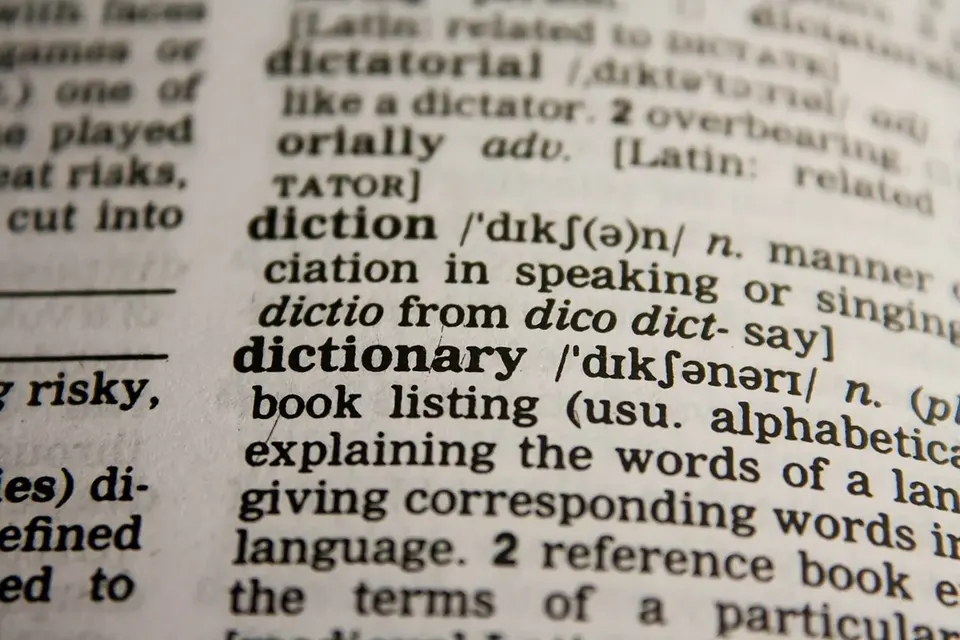
You have just typed "misspelt", and your spell checker has underlined it in red. Or you wrote "misspelled" and a British colleague changed it. Neither of you is wrong. Misspelled and misspelt are both standard past forms of the verb misspell; which one looks right depends on which side of the Atlantic you learned your English. There is, however, one spelling of this word that is wrong everywhere, and it is the one people most often type.
What misspell means
To misspell is simply to spell a word incorrectly. Merriam-Webster defines it as "to spell incorrectly", gives the forms misspelled, misspelling and misspells, and dates the first known use of the verb to 1655. Its example sentence could stand for half the corrections ever printed: "The name of the town was misspelled on the map." The noun is misspelling, and the person who misspells is, informally, a bad speller.
The word is built from the prefix mis-, meaning "wrongly" or "badly", and the verb spell, the same pattern as mislead, misjudge or mistype. It is pronounced with the stress on the second syllable: mis-SPELL.
The US/UK split
The Cambridge Dictionary sums it up in four words in its entry: "misspelled or UK misspelt". In practice that gives a simple rule:
| American English | British English | |
|---|---|---|
| Past tense | misspelled | misspelt or misspelled |
| Past participle | misspelled | misspelt or misspelled |
| Example | "Her name was misspelled on the badge." | "Her name was misspelt on the badge." |
| Spell checker set to US English | accepts misspelled only | — |
So in American writing, use misspelled; misspelt will look like a mistake to many readers and will be flagged by a spell checker set to US English. In British, Irish, Australian or New Zealand writing, both are acceptable, and many writers use misspelled anyway. The same split exists for the plain verb: spelled in the US, spelt or spelled in Britain. (Spelt is also the name of an ancient wheat, which gives the word a second life on bread labels.)
For the wider pattern behind this, from colour and color to travelled and traveled, see our guide to American and British spelling.
Why there is a -t form at all
Misspelt is not an exception; it belongs to a small family of verbs that kept an older past form ending in -t next to the regular -ed. Paul Brians, whose Common Errors in English Usage is hosted by Washington State University, puts it neatly: "You have learnt your lessons only in UK-influenced countries; you've learned them in the US." He lists dreamt/dreamed, dwelt/dwelled, leant/leaned, leapt/leaped and spelt/spelled as pairs where the -t form sounds "a little quaint and poetic" to American ears, and notes that burned/burnt and kneeled/knelt are both common in the US.
The family is easy to spot: short verbs ending in -l, -m or -n (spell, spill, spoil, dream, learn, burn, lean), whose -t forms reflect how the ending was actually pronounced. American English has largely regularised them to -ed, while British English has kept both. Adjectives often hold on to the -t even in the US: people say "burnt toast" and "spilt milk" on both sides of the ocean.
The double s: the misspelling everyone makes
The form that is wrong everywhere is mispelled, with one s. It is one of the most ironic typos in English, because the mistake sits exactly in the word that names it.
The rule is simple once you see it: when you add a prefix, you keep all the letters of both parts. Mis- ends in an s and spell begins with one, so the word has two:
- mis + spell = misspell, misspelled, misspelt, misspelling;
- mis + step = misstep; mis + shapen = misshapen; mis + statement = misstatement;
- the same logic gives dissatisfied (dis + satisfied), unnecessary (un + necessary) and irregular (ir + regular).
Doubled letters at the join of a prefix are one of the classic traps we describe in commonly misspelled words, alongside accommodate and necessary. A useful memory aid: say the word slowly as "miss-spell", as if you were missing a spell.
Where you will meet the word most
If you want to see misspelled in its natural habitat, read the corrections at the foot of news articles. Among the recent examples Merriam-Webster collects from the web is a correction from the Kansas City Star in September 2026: "An earlier version of this story misspelled the name of a managing partner" of an architecture firm. Names are where spelling errors hurt most, because a spell checker cannot help: it has no way of knowing whether Catherine is Katherine, or Smyth is Smith. The only defence is to copy names from a reliable source, such as an official website, a business card or a signed email, and to check them again before publishing. American newspapers print misspelled in these notes; British ones use both forms.
Which one should you use?
- Writing for an American publication, client or exam: misspelled.
- Writing in British English: either. If your organisation has a style guide, follow it; if not, pick one and use it throughout the document.
- Writing for an international audience: misspelled is the safer choice, since it is correct everywhere.
- Never: mispelled, mispelt, misspeled.
If your spell checker disagrees with you, check its language setting before changing the word: an editor set to US English will flag misspelt, and one set to UK English may accept both. You can try both forms in our free online spell checker. And remember that a spell checker only knows whether a string of letters exists, not whether it is the word you meant, which is why homophones slip through.
Sources
- Merriam-Webster, "misspell", consulted 28 November 2026.
- Cambridge Dictionary, "misspell", Cambridge University Press, consulted 28 November 2026.
- Paul Brians, "-ed / -t", Common Errors in English Usage, Washington State University, consulted 28 November 2026.
 Spelling & writing
American and British spelling
The handful of patterns behind color and colour, center and centre, -ize and -ise.
 Spelling & writing
Commonly misspelled words
Accommodate, separate, definitely: the traps they set and the tricks that fix them.
 Spelling & writing
Homophones spell checkers miss
Their, there, they're: real-word errors no dictionary lookup can catch.